Part 3 Carver on Sassafras
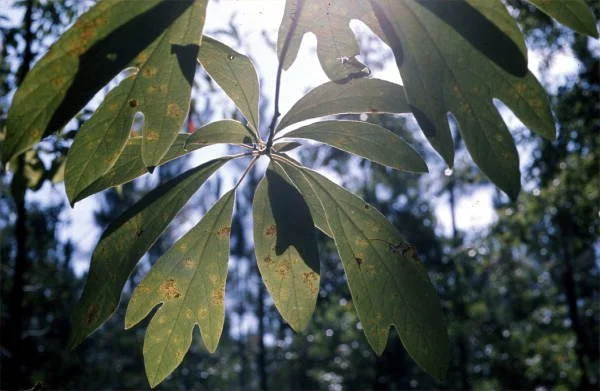
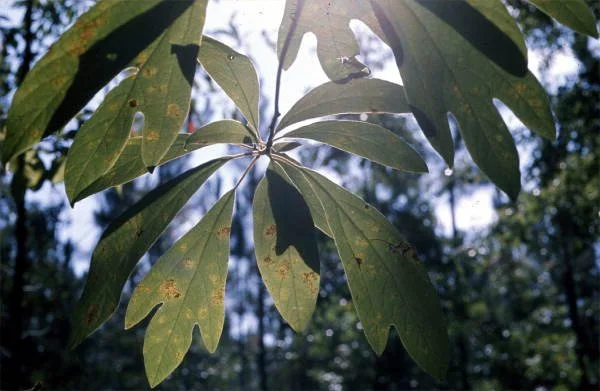
Sassafras leaves, Courtesy of the Florida Memory Project
When George Washington Carver first roamed the fields and woods around Tuskegee to gather specimens for his laboratory, his neighbors decided he must be a healer and began coming to him for remedies. He never minded. He spent his life proving that a common plant could feed a family, cure an illness, and earn a little money besides. This entry reminds me of Ntozake Shange's novel Sassafras, Cypress & Indigo, set in Charleston, South Carolina, it is a great read. The medicinal value of the sassafras tree is almost as old as time itself. Its oil serves many uses in the arts and trades, and its roots make delicious tea. The young, tender stems and leaves have become a real money maker. Cut, dried, and ground to a fine powder it seasons soups and broths. The powder is great for making gumbo. Cook it into the soup or set it on the table in a saltshaker to be used at will, like salt and pepper.
George Washington Carver, Nature’s Garden for Victory and Peace, Bulletin 43 (Tuskegee Normal and Industrial Institute, Experiment Station. Tuskegee, AL: Institute Press, 1942)