Courtesy of The New York Public Library
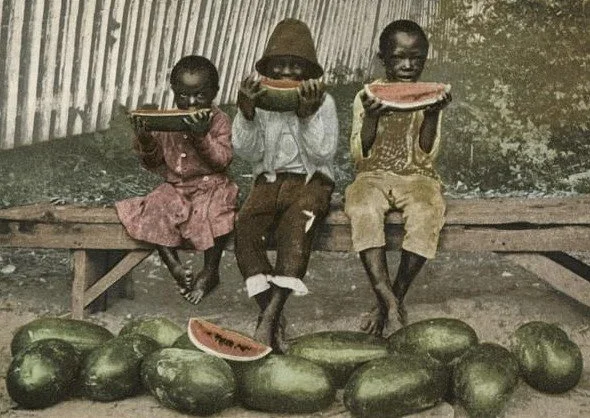
Example of a racist dominant caste caricature of people of African descent’s obsession with watermelons. Courtesy of The New York Public Library
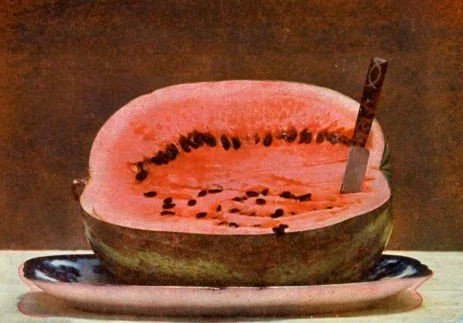
The white rind under a watermelon's red heart gets thrown out in most kitchens, and George Washington Carver's list of things a farm family could pack down in salt brine for later use put watermelon rinds right alongside cucumbers, green cantaloupes, and green tomatoes — all of them cheap, all of them ordinarily wasted. The melon carried an extra weight for the readers of this column, since cartoonists of the dominant caste had spent fifty years using it to caricature them. What the cooks did with it answers the caricature better than any editorial could: they took the part of the melon that had no market value at all and turned it into a spiced, gingered, pineapple-sweetened preserve that a hotel would have been glad to serve. Four pounds of rind here yield jars worth real money, and the technique had been circulating in the press for at least eighteen years — the Pittsburgh Courier ran a watermelon rind preserve on the same principle in 1911. Waste into product, and product into income: that is the whole argument of the preserving tradition compressed into one jar.
Pineapple-Watermelon Preserves
Ingredients
4 lbs. sugar
4 cups water
2 teaspoons ginger
Juice and grated rind of 4 lemons
4 lbs. watermelon rind, cut in small cubes
4 cups crushed pineapple
Directions
Boil the sugar and water together with the ginger and the lemon juice and grated rind for ten minutes. Add the cubed watermelon rind and simmer gently for three hours. Add the crushed pineapple and cook forty-five minutes longer. Seal in jars.
"Summer Fruits for Winter Use," Afro-American, August 31, 1929, 13.